
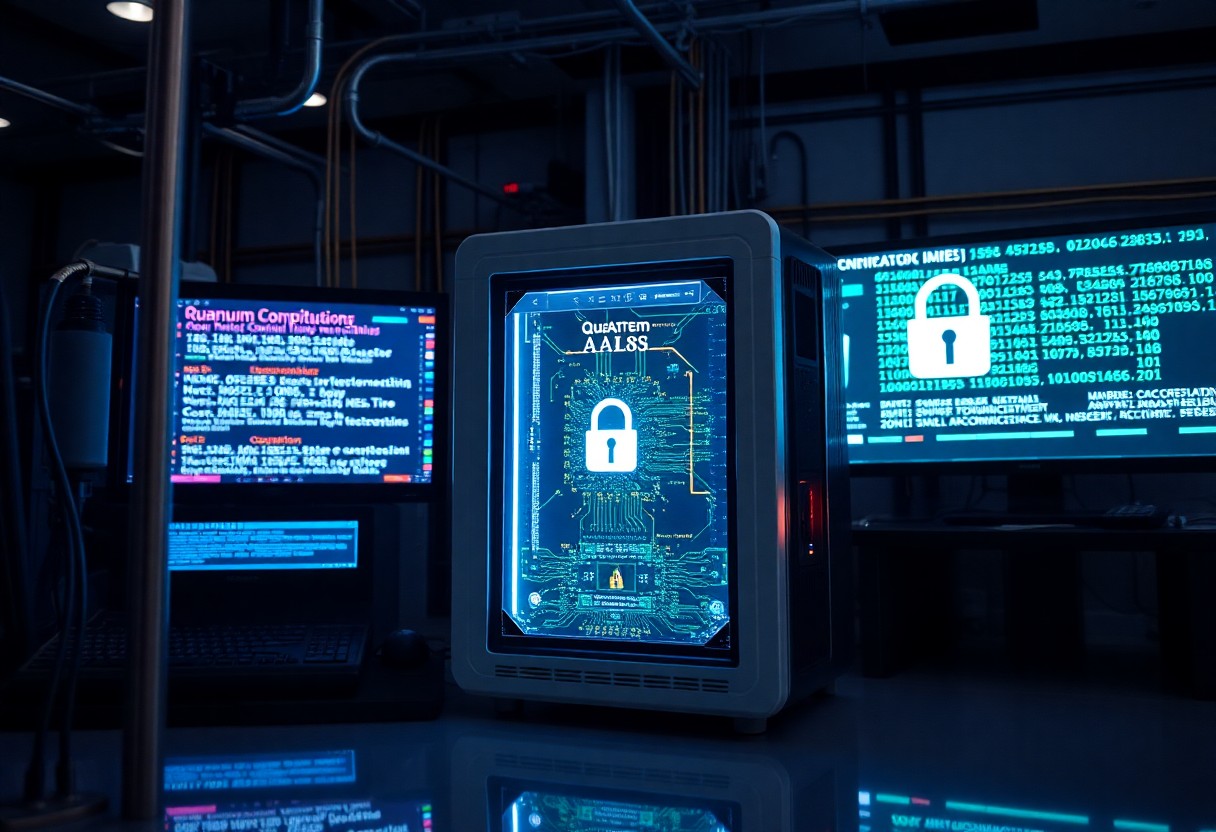
Quantum Computing and the Death of Encryption – Myth or Imminent Reality?
Just as you start to feel secure in your online privacy, advancements in quantum computing threaten to disrupt the very foundations of encryption. With the potential to break existing cryptographic systems, you might wonder if this represents an imminent reality or a mere myth. Understanding the implications of quantum technology is necessary, as it could redefine how you protect your sensitive data and privacy in the digital age. Join us as we explore the potential outcomes of this transformative technology on encryption and security.
Key Takeaways:
- Quantum computers have the potential to break widely used encryption methods, posing a significant security threat.
- Current quantum technology is not yet advanced enough to render encryption obsolete, but advancements are rapidly progressing.
- The transition to quantum-resistant encryption is important to safeguard data against future quantum attacks.
Quantum Mechanics Meets Cybersecurity
As quantum computing evolves, so does its relationship with cybersecurity. The principles of quantum mechanics, such as superposition and entanglement, introduce capabilities that conventional computing cannot match, creating an urgent need to reassess existing security protocols. The threat posed by quantum computers extends beyond mere computational speed; they challenge the very foundation of encryption as you know it. Traditional methods, based on mathematical complexity, may soon be rendered ineffective against the quantum threat, compelling you to reevaluate the protections surrounding your sensitive data.
The Quantum Advantage: How Qubits Transform Computing
Qubits, the building blocks of quantum computing, enable unprecedented parallelism, allowing quantum computers to process vast amounts of data simultaneously. Unlike classical bits that exist as either a zero or one, a qubit can represent both states at once. This property leads to significantly faster problem-solving capabilities in tasks such as cryptography, optimization, and complex simulations. With quantum computers leveraging this superior computational power, your traditional encryption methods may soon be at risk, leading to an urgent shift in cybersecurity strategies.
Current Encryption Methods: Vulnerabilities and Limitations
Current encryption methods, including RSA and ECC, face significant vulnerabilities in light of advancements in quantum computing. These algorithms rely on the difficulty of factoring large numbers or solving discrete logarithm problems, which quantum algorithms, like Shor’s algorithm, can solve efficiently. As quantum computers become more powerful, your sensitive data, protected only by these conventional methods, is increasingly susceptible to exploitation.
Most widely-used encryption methods like RSA (Rivest-Shamir-Adleman) offer a foundation of security predicated on mathematical challenges that a classical computer struggles to solve. However, with quantum capabilities on the horizon, the vulnerabilities become apparent. For instance, RSA’s security, which relies on the difficulty of factoring large prime numbers, can be dismantled in polynomial time by Shor’s algorithm, effectively rendering such systems obsolete. As you consider the growing reliance on digital transactions and data storage, understanding these limitations and the urgent need for quantum-resistant algorithms becomes increasingly important to safeguard your information.
Cryptography in the Age of Quantum Supercomputers
The advent of quantum supercomputers poses unprecedented challenges for traditional cryptography, necessitating a re-evaluation of security protocols. As quantum systems become more powerful, you must recognize that algorithms once considered secure may no longer protect sensitive information. Current encryption methods, particularly those based on mathematical problems like factoring, will need significant upgrades or replacements to withstand quantum attacks. Understanding the implications of these advancements is vital for anyone invested in maintaining cybersecurity.
Shor’s Algorithm: The Sword of Damocles for RSA Encryption
Shor’s Algorithm presents a direct threat to RSA encryption, the backbone of today’s secure communication. Utilizing quantum supercomputers, this algorithm can factor large integers exponentially faster than classical methods, potentially compromising systems that rely on RSA’s mathematical difficulty. If sufficiently advanced quantum computing becomes accessible, your confidential information could be at risk within hours, rendering current protective measures virtually obsolete.
Quantum Key Distribution: A Potential Lifeline
Quantum Key Distribution (QKD) offers a robust potential solution against quantum attacks by leveraging the principles of quantum mechanics. In this approach, you can create and share encryption keys with an inherent level of security, as any eavesdropping attempt changes the key state and alerts you to the intrusion. This method, while still in its early development stages, represents a promising avenue to safeguard your data against quantum threats.
With QKD, the communication channels are fortified through quantum entanglement and the nature of photon behavior, creating a secure method to exchange cryptographic keys. Utilizing protocols such as BB84, you can ensure that any interception of transmitted qubits will render the keys ineffective. Implementing QKD in your systems could bridge the gap between current cryptographic measures and the anticipated quantum future, effectively fortifying your cyber defenses. As practical applications continue to expand, adopting QKD could become a critical strategy for maintaining confidentiality and integrity in the digital realm.
The Dichotomy of Fear and Reality in Encryption’s Fate
The landscape of encryption is rife with contrasting perspectives, where anxieties about quantum threats often overshadow the reality of ongoing efforts in cybersecurity. Your confidence in the current encryption systems may be shaken by sensational narratives, yet understanding the nuances of this evolving technology can reshape that perspective. While concerns about quantum computing’s potential to break encryption are valid, they should be measured against the advancements being made in protective measures.
Overstated Fears: Debunking Myths of Imminent Collapse
The notion that encryption will imminently collapse under quantum attacks is exaggerated. Many experts assert that existing cryptographic systems won’t fail overnight, as quantum capabilities are still in early developmental phases. You can find reassurance in the fact that significant barriers remain before quantum computers achieve the scale and power necessary to threaten widely used encryption standards.
The Reality Check: Transitioning to Post-Quantum Cryptography
Transitioning to post-quantum cryptography is already underway, with several protocols in development to safeguard against quantum threats. By leveraging alternative mathematical structures, these new methods promise to maintain security even in the face of quantum advancements. IT professionals are actively assessing and implementing these protocols to ensure your data remains secure as quantum capabilities progress.
Existing cryptographic frameworks such as RSA and ECC will gradually be replaced with post-quantum alternatives like lattice-based cryptography, which provides a robust defense against potential quantum decryption. You might find that organizations have begun pilot programs to transition seamlessly, ensuring backward compatibility with legacy systems. Initiatives, including NIST’s ongoing standardization efforts for post-quantum cryptographic algorithms, reflect a proactive stance toward future-proofing your digital security. The timeline for implementation may vary, but the shift is gaining momentum as you prepare for a more secure, quantum-resilient landscape.
Preparing for a Quantum-Enabled Future
As quantum technology develops, preparing for its implications on security becomes paramount. You need to stay informed about quantum advancements and their potential impact on your data protection strategies. Engaging with experts in quantum-safe cryptography and implementing proactive measures can significantly reduce vulnerabilities that quantum computers may exploit. Start exploring quantum-resistant algorithms and transition plans to make your systems resilient against future threats.
Strategies for Businesses and Individuals to Adapt
For businesses and individuals, adapting to a quantum-enabled future involves embracing a multi-faceted approach. You can begin with investing in quantum-resistant encryption technologies, conducting regular security assessments, and fostering a culture of cybersecurity awareness within your organization. Collaboration with technology partners to stay ahead of the curve and utilizing hybrid solutions that integrate both classical and quantum-safe cryptographic methods are also vital steps toward enhancing your security posture.
Innovations on the Horizon: How Future Technologies Can Enhance Security
Future technologies promise to bolster security frameworks in the face of advancing quantum threats. Innovations like quantum key distribution (QKD) offer a transformative approach to secure communication, exploiting the principles of quantum mechanics to ensure that any interception is detectable. Alongside this, developments in blockchain technology aim to create immutable records that can withstand not only quantum attacks but also decrease the risk of data breaches through decentralized validation processes. These advancements can empower you to deploy a security infrastructure that is resilient and adaptable.
The ongoing research in quantum-safe cryptography emphasizes algorithmic breakthroughs, such as lattice-based cryptography and multivariate polynomial equations, which are designed specifically to resist quantum decryption techniques. Major tech companies and research institutions are already testing these algorithms to ensure their viability in real-world applications. By embracing these innovative solutions, you can secure your digital assets against the current and emerging threats posed by quantum capabilities. Implementing these technologies not only enhances your security but also prepares you for a future where quantum computing is a mainstream reality.
The Role of Policy and Regulation in Cyber Resilience
Effective cyber resilience hinges on robust policy frameworks and regulatory measures that can adapt to the rapid advancements of quantum computing. You must advocate for regulations that not only address current threats but also anticipate future vulnerabilities, ensuring that your cybersecurity strategies remain proactive rather than reactive. With consistent oversight and updated legal guidelines, organizations can better align their security practices with emerging technologies, ultimately fostering a more secure digital environment.
Crafting Standards for Quantum-Ready Encryption
Establishing standards for quantum-ready encryption is necessary for mitigating the risks posed by quantum computing. You should support the development of algorithms designed to withstand quantum attacks, such as lattice-based or hash-based cryptography. Involving industry stakeholders in this process ensures that practical solutions are created, allowing you to transition smoothly to new encryption methods while maintaining data integrity and confidentiality.
Global Cooperation: The Need for a Unified Approach to Cybersecurity
Effective cybersecurity against quantum threats requires a collective effort, where nations collaborate to establish global standards and practices. You can engage in alliances and coalitions that encourage sharing knowledge, resources, and expertise, enabling a unified response to cyber threats that transcends borders.
The interconnected nature of today’s digital landscape means that cyber threats can affect multiple nations simultaneously, making cooperation indispensable. For instance, the European Union has initiated efforts to harmonize cybersecurity regulations among member states, promoting shared frameworks that enhance resilience. By participating in international forums like the United Nations Group of Governmental Experts, you can contribute to shaping policy dialogues that promote consensus on cybersecurity norms, thus fortifying defenses against quantum-enabled attacks and ensuring that all nations can effectively protect their digital environments.
Summing up
Hence, you should recognize that while quantum computing poses a significant threat to current encryption methods, the timeline for its widespread impact remains uncertain. The myths surrounding an immediate threat often overshadow the ongoing efforts to develop post-quantum cryptography that can safeguard your data. As advancements continue, staying informed will empower you to better navigate the evolving landscape of digital security and protect your sensitive information against potential future vulnerabilities.
FAQ
Q: How does quantum computing threaten current encryption methods?
A: Quantum computing can potentially break widely used encryption algorithms, such as RSA and ECC, due to its ability to solve complex mathematical problems much faster than classical computers. This capability arises from quantum algorithms like Shor’s algorithm, which can factor large integers efficiently, posing risks to data security.
Q: Are there mitigation strategies to counter the impact of quantum computing on encryption?
A: Yes, researchers are developing post-quantum cryptography, which includes new encryption standards designed to be secure against quantum attacks. These methods leverage mathematical problems believed to be difficult for quantum computers, aiming to ensure long-term data security even in a quantum future.
Q: When can we expect quantum computers to actually break encryption?
A: While quantum computing technology is advancing, widespread and practical quantum computers capable of breaking current encryption are not yet available. Estimates suggest it may take 10 to 30 years before such capabilities are realized, giving time for the development of more secure cryptographic methods.